

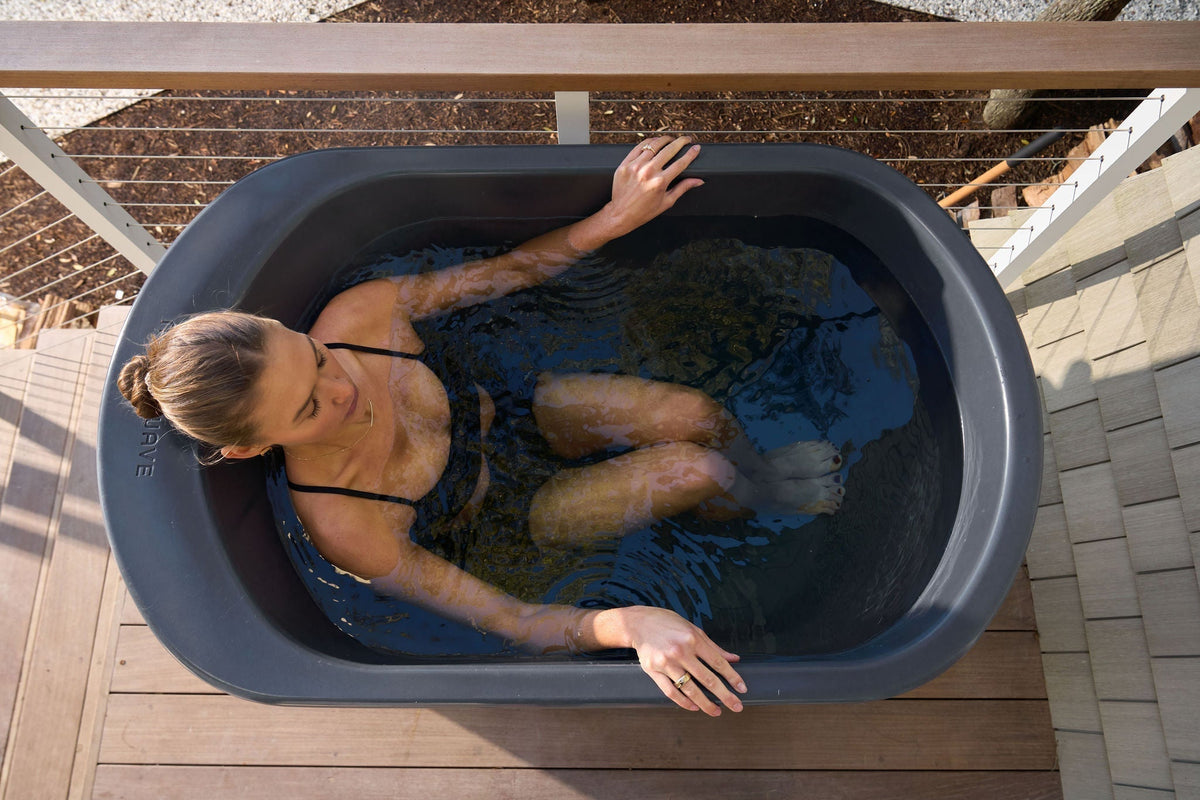
For decades, wellness ran on a shared formula: sleep more, move your body, eat better, reduce stress. Those foundations haven't changed. What's changed is the question underneath them — from "what's the best routine for everyone?" to "what does my body actually need?" That shift didn't come from a new philosophy. It came from new information.
TL;DR — What "Personalized Wellness" Means
- Wearables, bloodwork, and glucose monitors now make it possible to build health decisions around your own data, not general population averages
- We call this Signal-Based Wellness: using your body's own feedback — sleep, recovery, glucose response — as the basis for your routine, instead of a template built for someone else
- The goal is awareness, not more tracking — one reliable data source is enough to start
- Generic advice ("sleep 8 hours," "exercise more") still holds directionally, but personalization tells you where to apply it first and how hard to push
- This applies to recovery tools too — cold exposure protocols work the same way, calibrated to the individual rather than copied wholesale
What Is Signal-Based Wellness?
Signal-Based Wellness is the practice of building health decisions around your own physiological data — sleep, recovery, glucose response, bloodwork — rather than following generic, population-level recommendations. It replaces "the best routine for everyone" with "what does my body's own feedback say."
Wearables track sleep stages, recovery, and daily strain without extra effort. Bloodwork surfaces deficiencies or imbalances before they become symptoms. Glucose monitoring — once confined to diabetes management — has moved into general wellness: the first over-the-counter continuous glucose monitor cleared for non-diabetic use reached the market this year, and U.S. health officials have started actively promoting wearable adoption as a public health strategy, not just a consumer trend.
None of this is about chasing more data for its own sake. A dashboard full of metrics with no context is just noise. The value shows up when the data changes a decision.
The Five Signals Worth Actually Tracking
Most people don't need a dozen metrics — they need a handful they actually understand. These five show up across nearly every wearable and lab test, and each one maps to a specific decision:
| Signal | What It Tells You | Where It Comes From |
|---|---|---|
| Heart rate variability (HRV) | Nervous system recovery — a declining trend signals accumulated stress before you feel it | Most wearable rings, watches, and chest straps |
| Resting heart rate | A rising baseline over several days often precedes illness, overtraining, or poor sleep | Any wearable with continuous heart rate tracking |
| Sleep stage breakdown | Total hours matter less than deep and REM sleep proportion — the stages tied to physical and cognitive recovery | Sleep-tracking wearables |
| Glucose response curve | How sharply your blood sugar spikes and falls after specific meals — highly individual even for similar foods | Continuous glucose monitors |
| Baseline bloodwork markers | Nutrient deficiencies, inflammation markers, and metabolic indicators invisible without a lab test | Annual or biannual bloodwork panels |
A systematic review published in JMIR concluded that wearable devices support better patient-centered care specifically because continuous signals like these catch problems earlier than periodic checkups can. That's the actual mechanism behind "awareness" — not more data, but earlier, more specific data.
The Goal Is Awareness, Not Obsession
Signal-Based Wellness is not about tracking everything — it's about building awareness of the handful of signals that actually change your decisions, then acting on them. Conflating personalization with maximal tracking is a common mistake, and it isn't sustainable.
In practice, that looks like:
- A sleep score that points to a specific gap in your evening routine — not just a number to feel good or bad about
- Recovery data that tells you when to actually rest, instead of pushing through on a fixed schedule
- Energy patterns that reveal which habits genuinely move the needle for you, separate from what worked for someone else
Your body is giving you feedback constantly. Signal-Based Wellness is the practice of listening to it instead of overriding it with someone else's plan.
Why Generic Advice Runs Out of Room
General wellness recommendations aren't wrong, they're incomplete — built for population averages, not individual variation in sleep architecture, recovery capacity, or training response. "Sleep eight hours" and "exercise more" are directionally sound but can't tell you where your specific limiting factor is.
Personalization doesn't replace the fundamentals. It tells you where to apply them first, and how hard to push.
Generic Wellness vs. Signal-Based Wellness
The two approaches differ in where the decision comes from: generic wellness starts with a population-level recommendation, while Signal-Based Wellness starts with your own data and treats general guidance as a starting point to adjust, not a fixed target.
| Question | Generic Wellness | Signal-Based Wellness |
|---|---|---|
| How much sleep? | 8 hours, every night | Whatever your deep + REM proportion says you actually need to feel recovered |
| When to rest? | Fixed rest days on the calendar | When HRV or resting heart rate signals accumulated stress, regardless of the schedule |
| What to eat? | General nutrition guidelines | Adjusted around your own glucose response to specific foods |
| How long to cold plunge? | A fixed number of minutes for everyone | Calibrated to your recovery capacity, stress load, and specific goal |
How to Start Practicing Signal-Based Wellness
Start with one signal, not five — track it consistently for two to three weeks before changing anything, then adjust a single variable at a time based on what you see.
- Pick one signal that matches your biggest question right now. Struggling with energy? Start with sleep stages. Training hard? Start with HRV or resting heart rate. Curious about food? Start with glucose response.
- Establish a baseline before judging anything. Two to three weeks of consistent data is enough to see your normal range — a single bad night or one high reading isn't a pattern.
- Change one variable at a time. If you adjust bedtime, diet, and training volume simultaneously, you won't know which one moved the number.
- Let the data adjust the recommendation, not replace it. The eight-hour sleep guideline, the "wait a few hours before cold plunging after lifting" rule — these stay useful starting points. Your data tells you how to fine-tune them for your specific case.
What Signal-Based Wellness Looks Like in Practice
Signal-Based Wellness applies to recovery tools the same way it applies to sleep or nutrition: the practice matters, but the calibration — duration, frequency, intensity — is personal, not templated.
Cold exposure is a useful example. The right duration, frequency, and temperature vary meaningfully by individual — recovery capacity, stress load, and goals all shift the dose that actually works. A protocol built for someone else's nervous system isn't automatically the right one for yours.
That's the throughline across every category: sleep, food, stress, recovery. Less "follow this exact plan," more "here's what your own data says, now build a ritual around it."
Becoming More Connected to Your Own Body
The future of health isn't a more complicated version of what we've been doing. It's a more personal one — fitness plans shaped by your own recovery data, nutrition informed by how your body actually responds to food, and daily rituals like cold exposure calibrated to you rather than borrowed wholesale from someone else's routine.
Wellness stops being about copying a routine and starts being about understanding a pattern — yours.
Frequently Asked Questions
What is Signal-Based Wellness?
Signal-Based Wellness is the practice of building health decisions around your own physiological data — sleep, recovery, glucose response, bloodwork — instead of generic, population-level recommendations.
What does "personalized wellness" actually mean?
It means building health habits based on your own data rather than following one-size-fits-all recommendations built for a general population.
Do I need a lot of devices or data to start personalizing my wellness routine?
No. One reliable data source — a sleep tracker, a recovery metric, or consistent self-observation — is enough to start making more intentional choices.
Is continuous glucose monitoring only for people with diabetes?
Not anymore. Over-the-counter CGMs are now approved for general use, and a growing share of users are non-diabetic people using them to understand how food and lifestyle choices affect their metabolic health.
Does personalized wellness apply to recovery tools like cold plunging?
Yes. Duration, frequency, and temperature for cold exposure all vary by individual recovery capacity and goals — the same Signal-Based Wellness principle that applies to sleep or nutrition tracking applies to recovery protocols.
Key Takeaways
- Signal-Based Wellness means building routines around your own data, not generic templates
- Awareness beats obsession — one reliable data source is enough to start
- Generic advice still matters; personalization tells you where to apply it first
- The same logic applies to recovery tools like cold exposure as it does to sleep and nutrition
Build Your Own Signal-Based Recovery Ritual.
The Viking Cold Plunge holds precise temperatures from 39°F to 55°F, so your protocol — not your equipment — is what you're calibrating. Backed by a 5-year warranty and HSA/FSA eligible.
Nordic Wave makes premium cold plunge and recovery equipment for people building their own evidence-based wellness rituals. Browse the full Viking cold plunge lineup to find the right model for your space.
Share: