

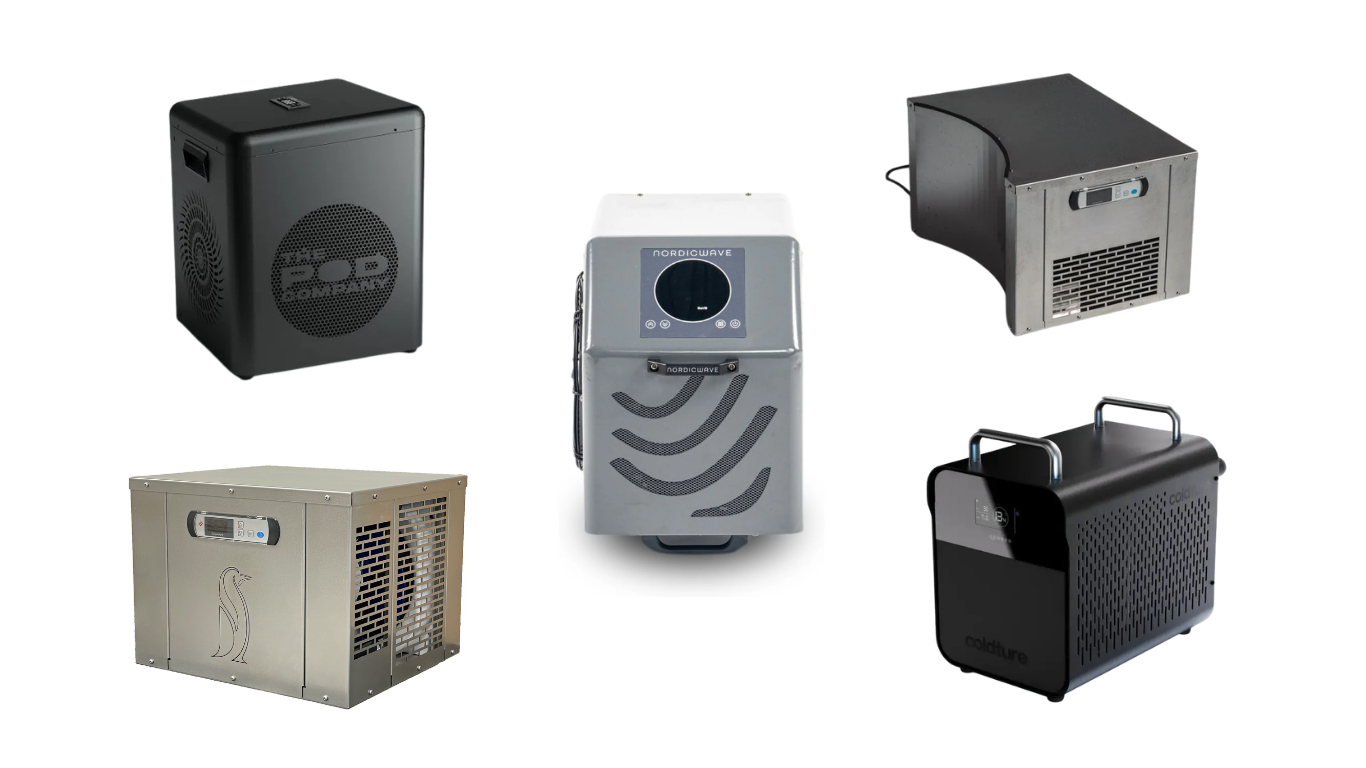
Cold Plunge Chiller: What It Is, How It Works, and Why It Matters
A cold plunge chiller is a refrigeration system that cools and maintains the temperature of water in a cold plunge. Unlike ice, which melts and gradually allows water to warm back up, a chiller continuously removes heat from the water to maintain a selected temperature. For people who cold plunge regularly, a chiller provides a more consistent and convenient alternative to buying and adding ice before every session.
But a chiller is only one part of an effective cold plunge system. The cold plunge's insulation, water filtration, sanitation, circulation, and temperature control all affect how well the system performs.
What Is a Cold Plunge Chiller?
A cold plunge chiller is the component responsible for cooling and regulating the water in a cold plunge.
Most mechanical cold plunge chillers use a refrigeration process similar to the cooling system found in a refrigerator or air conditioner. Water circulates from the cold plunge into the chiller, where heat is removed. The cooled water then returns to the cold plunge, and the process repeats until the water reaches the selected temperature.
A complete cold plunge system may include:
-
A cold plunge
-
A circulation pump
-
A mechanical chiller
-
A water filter
-
A sanitation system
-
Plumbing connecting the components
-
Insulation around the cold plunge
The chiller actively controls the water temperature, while the other components help the system operate efficiently and keep the water clean.
How Does a Cold Plunge Chiller Work?
A cold plunge chiller uses a refrigeration cycle to transfer heat out of the water.
The basic process works like this:
1. Water leaves the cold plunge.
A circulation system moves water from the cold plunge through the connected plumbing.
2. Water enters the chiller.
The water passes through the chiller's cooling system.
3. Heat is removed.
The refrigeration system transfers heat out of the water.
4. Cooled water returns to the cold plunge.
The colder water flows back into the cold plunge.
5. The system maintains the selected temperature.
Once the water reaches the desired temperature, the chiller cycles as needed to maintain it.
This process allows a mechanical chiller to continuously manage water temperature instead of relying on a one-time cooling source.
That is the primary difference between a chiller and ice. Ice absorbs heat as it melts, but eventually disappears. A chiller can continue removing heat from the water as long as the system is operating.
How Cold Can a Cold Plunge Chiller Get?
The minimum temperature of a cold plunge chiller depends on its cooling capacity, water volume, cold plunge insulation, ambient temperature, and other operating conditions.
Not all cold plunge chillers reach the same temperature, so it is important to look at the manufacturer's actual specifications when comparing systems.
The Nordic Wave Gen 2 Chiller can cool water to 35°F.
That gives users control over a broad range of cold plunge temperatures rather than requiring them to rely on ice or environmental conditions.
But minimum temperature is only one specification worth considering.
Temperature consistency matters, too.
How Consistent Is a Cold Plunge Chiller's Temperature?
A chiller's ability to reach a low temperature is only part of the equation. A quality cold plunge system should also be able to maintain the selected temperature consistently.
The Nordic Wave Gen 2 Chiller is designed to maintain water temperature within ±2°F of the selected temperature.
For example, if the system is set to 40°F, the intended temperature range is approximately 38–42°F.
That consistency makes it easier to establish a repeatable cold plunge routine. Instead of relying on how much ice you added or how warm the surrounding environment is, you can select a temperature and allow the system to manage it.
When comparing cold plunge chillers, look beyond the lowest advertised temperature.
Minimum temperature tells you how cold a chiller can get. Temperature variability tells you how consistently it can maintain that temperature.
Can a Cold Plunge Chiller Heat Water?
Some cold plunge chillers can both cool and heat water, giving the system a much wider operating range.
The Nordic Wave Gen 2 Chiller can cool water to 35°F and heat water to 104°F.
This allows the same system to regulate both cold and warm water temperatures rather than requiring separate equipment.
For users who want flexibility beyond cold plunging, a heating-and-cooling system can make the cold plunge more versatile throughout the year.
Why Cold Plunge Insulation Matters
When comparing cold plunge systems, don't look at the chiller alone.
The insulation of the cold plunge plays a major role in how efficiently the entire system maintains its temperature.
A poorly insulated cold plunge allows more heat from the surrounding environment to enter the water. When that happens, the chiller has to run more frequently and work harder to maintain the desired temperature.
More heat entering the water means more work for the cooling system, which can increase electricity consumption.
A well-insulated cold plunge helps slow the transfer of heat into the water, allowing the chiller to maintain the temperature more efficiently.
The Chiller Creates the Cold. Insulation Helps Keep It Cold.
Think of the relationship this way:
Chiller → creates and maintains the cold
Insulation → slows heat from getting back in
A powerful chiller paired with a poorly insulated cold plunge can still lose efficiency because the system is constantly fighting heat transfer from the surrounding environment.
That is why insulation should be considered alongside chiller specifications when comparing cold plunge systems.
Why the Viking Cold Plunge Is Designed for Efficiency
The Nordic Wave Viking Cold Plunge features 2-inch foam-insulated walls designed to help minimize heat transfer between the water and the surrounding environment.
The insulated cold plunge works together with the Nordic Wave chiller to help maintain the selected water temperature.
This is particularly important for outdoor installations and warmer climates, where the surrounding air can be significantly warmer than the water inside the cold plunge.
When comparing cold plunge systems, ask two questions:
How capable is the chiller?
How well is the cold plunge insulated?
The two work together.
Cold Plunge Chiller vs. Ice
Ice is one of the simplest ways to cool a cold plunge, but it becomes less convenient as plunge frequency increases.
| Cold Plunge Chiller | Bags of Ice | |
|---|---|---|
| Upfront cost | Higher | Lower |
| Ongoing cooling cost | Electricity | New ice for each session |
| Temperature control | Set and maintain a temperature | Changes as ice melts |
| Preparation | Minimal | Purchase and add ice |
| Regular use | Convenient for frequent plunging | More time-consuming |
| Temperature consistency | Designed to maintain temperature | Depends on ice quantity and starting water temperature |
How Much Does Ice Cost for a Cold Plunge?
The cost of using ice can add up quickly.
A typical cold plunge may require approximately 4–5 bags of ice for one session, depending on the starting water temperature, water volume, ambient temperature, and desired plunge temperature.
If a bag of ice costs $5, that means approximately:
-
$20–$25 per plunge
-
$80–$100 per week at four plunges per week
-
$347–$433 per month
-
$4,160–$5,200 per year
Actual costs vary based on local ice prices and how much ice your particular setup requires.
A chiller has a higher initial purchase price, but it eliminates the need to purchase several bags of ice every time you want to plunge. Instead, the ongoing cooling cost is primarily electricity and routine maintenance.
For someone who plunges multiple times per week, the difference can become substantial over time.
How Does a Cold Plunge Chiller Keep the Water Clean?
Temperature control is only one part of maintaining a cold plunge.
A frequently used cold plunge also needs a system for managing debris, filtering the water, and providing sanitation.
Cold plunge systems can use different combinations of physical filtration and sanitation. When comparing systems, it is worth understanding exactly what each stage does.
Nordic Wave's chiller uses three stages of water cleaning and sanitation.
1. Inline Hose Strainer
Before water enters the chiller system, it passes through an inline hose strainer.
The strainer catches larger debris such as:
-
Leaves
-
Hair
-
Dirt
-
Other visible debris
This first stage is especially useful for outdoor cold plunges, where the cold plunge can be exposed to the surrounding environment.
The inline hose strainer should be checked and cleaned regularly to maintain proper water flow.
2. Water Filter
After passing through the initial strainer, the water moves through a dedicated water filter.
The water filter continuously filters the circulating plunge water, capturing smaller particles that pass through the initial strainer.
Because the water continually circulates through the system, filtration occurs while the chiller is operating rather than only when the cold plunge is manually cleaned.
The filter still needs to be replaced regularly according to the manufacturer's maintenance recommendations.
3. UV Sanitation
The third stage is UV sanitation, which provides an additional layer of water treatment.
UV sanitation uses ultraviolet light as part of the water-treatment process. Combined with the inline hose strainer and physical water filter, it creates a layered approach to water management.
The three stages can be summarized as:
Inline Hose Strainer → Water Filter → UV Sanitation
The distinction is important: the inline strainer catches larger debris, the water filter continuously filters the circulating water, and UV provides an additional sanitation step.
Can a Cold Plunge Chiller Be Used Outdoors?
A cold plunge chiller can be used with an outdoor cold plunge when the system is designed for the environmental conditions where it will operate.
Outdoor temperatures can affect chiller performance. A system operating in a hot climate has to remove more heat from the water than the same system operating in a cooler environment.
When choosing a chiller for outdoor use, consider:
-
Ambient temperature
-
Direct sunlight
-
Ventilation
-
Water volume
-
Cold plunge insulation
-
Electrical requirements
-
Drainage
-
Manufacturer installation requirements
For warmer climates and outdoor, year-round setups, Nordic Wave recommends the Gen 2 Elite Chiller.
How to Choose a Cold Plunge Chiller
There is no single chiller that is right for every cold plunge. The right system depends on your cold plunge size, climate, desired temperature, and frequency of use.
1. Check the temperature range
Look at the actual minimum and maximum temperatures rather than assuming all chillers perform the same way.
The Nordic Wave Gen 2 Chiller operates from 35°F to 104°F.
2. Look at temperature consistency
Minimum temperature does not tell you how well a chiller maintains that temperature.
Look for a published temperature variability specification.
The Nordic Wave Gen 2 Chiller is designed to maintain temperature within ±2°F of the selected temperature.
3. Consider water volume
Larger water volumes generally require more cooling capacity. Make sure the chiller is designed to work with the size of your cold plunge.
4. Consider your climate
Outdoor temperatures affect how hard a chiller needs to work. If you live somewhere hot or plan to keep your cold plunge outside year-round, cooling capacity becomes particularly important.
5. Consider cold plunge insulation
A well-insulated cold plunge can help reduce heat transfer into the water and reduce the amount of work required to maintain the desired temperature.
The Viking Cold Plunge uses 2-inch foam-insulated walls to help retain the water temperature.
6. Look at water management
Check whether the system includes filtration and sanitation in addition to temperature control.
A system that combines temperature control with water filtration and sanitation can simplify regular maintenance.
7. Consider water flow and protection
Features such as auto-priming, increased flow rate, and low-flow protection can make a system easier to operate and help protect the equipment.
8. Consider heating capability
If you want one system that can manage both cold and warm water temperatures, look for a chiller with heating functionality.
The Nordic Wave Gen 2 Chiller can heat water to 104°F in addition to cooling it to 35°F.
What Makes the Nordic Wave Cold Plunge Chiller Different?
Cold plunge chillers can vary significantly in their cooling capacity, temperature consistency, water management, and features.
The Nordic Wave Gen 2 Chiller combines temperature control with a three-stage water cleaning and sanitation system.
Key specifications and features include:
-
Cooling: As low as 35°F
-
Heating: Up to 104°F
-
Temperature consistency: ±2°F
-
Temperature control: Precision digital control
-
Water protection: Inline hose strainer
-
Water filtration: Continuous water filtration
-
Sanitation: UV sanitation
-
Auto-priming
-
Increased flow rate
-
FlowSense protection
-
Digital temperature display
-
Wheels for easier positioning
The Gen 2 Chiller is designed to pair with the Nordic Wave Viking Cold Plunge, creating an integrated system where the chiller, insulated cold plunge, filtration, and sanitation work together.
Explore the Viking Cold Plunge →
Is a Cold Plunge Chiller Worth It?
For occasional cold plunging, ice can be a straightforward way to lower water temperature.
For regular use, a dedicated chiller offers a more consistent and convenient solution. You can select your desired temperature, maintain it over time, and avoid purchasing and adding several bags of ice before every session.
The financial difference can also become meaningful for frequent users. At approximately 4–5 bags of ice per session, someone plunging several times per week could spend thousands of dollars per year on ice alone.
A chiller also eliminates much of the preparation involved with ice. Instead of buying, transporting, storing, and adding ice, the system can maintain the water temperature between sessions.
Ultimately, the value of a chiller comes down to consistency, convenience, efficiency, and control.
The best cold plunge system isn't simply the one with the coldest advertised temperature. It is the one that can efficiently create, maintain, and manage the temperature you want.
Frequently Asked Questions About Cold Plunge Chillers
What is a cold plunge chiller?
A cold plunge chiller is a refrigeration system that removes heat from cold plunge water to lower and maintain its temperature. Unlike ice, a chiller can continuously cool the water and maintain a selected temperature.
How cold does a cold plunge chiller get?
The minimum temperature varies by model. The Nordic Wave Gen 2 Chiller can cool water to 35°F.
How accurate is a cold plunge chiller's temperature?
Temperature consistency varies by system. The Nordic Wave Gen 2 Chiller is designed to maintain water temperature within ±2°F of the selected temperature.
Do you need a chiller for a cold plunge?
No. Ice can be used to cool a cold plunge. However, a dedicated chiller is more convenient for regular use because it can continuously cool and maintain the water temperature without requiring new ice for every session.
Can a cold plunge chiller heat water?
Some cold plunge chillers can both cool and heat water. The Nordic Wave Gen 2 Chiller can cool water to 35°F and heat it to 104°F.
How does a cold plunge chiller filter water?
Cold plunge systems can use multiple stages of water treatment. The Nordic Wave system uses an inline hose strainer to catch larger debris, a water filter that continuously filters circulating water, and UV sanitation as an additional sanitation layer.
Does cold plunge insulation matter?
Yes. Cold plunge insulation helps reduce heat transfer between the surrounding environment and the water. A well-insulated cold plunge can help the chiller maintain the desired temperature more efficiently. The Nordic Wave Viking Cold Plunge features 2-inch foam-insulated walls.
Is a cold plunge chiller better than using ice?
For regular cold plunging, a chiller offers several advantages over ice, including consistent temperature control, less preparation, and no need to continually purchase bags of ice. Ice can still be a practical option for occasional use.
The Bottom Line
A cold plunge chiller is more than a way to make water cold. It is the system that gives you control over water temperature, and depending on the system, can also provide filtration and sanitation.
When comparing cold plunge chillers, look beyond the lowest temperature advertised. Consider the temperature range, temperature consistency, cooling capacity, cold plunge insulation, filtration, sanitation, water flow, maintenance, climate, and operating costs.
Nordic Wave's approach combines a chiller capable of reaching 35°F, temperature consistency within ±2°F, heating up to 104°F, three-stage water cleaning and sanitation, and a Viking Cold Plunge with 2-inch foam-insulated walls.
The result is a cold plunge system designed not just to get cold, but to stay cold, stay consistent, and stay ready for your routine.
Share: