

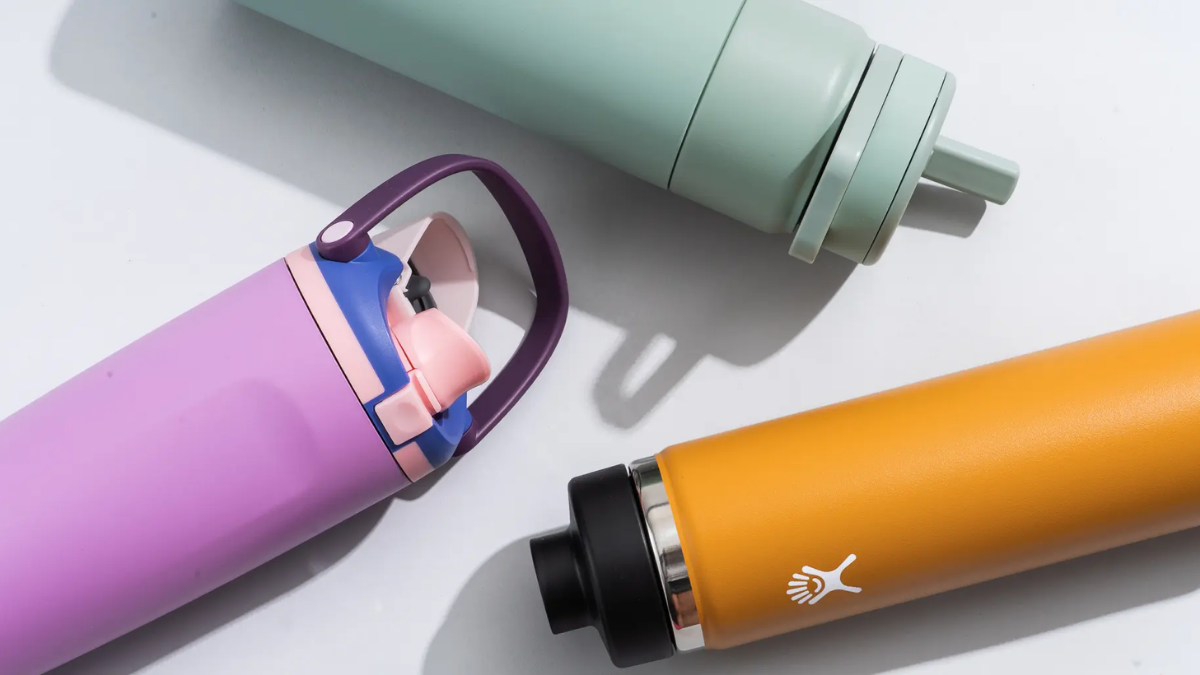
There’s always a “cool” water bottle.
It’s been the Stanley, which withstood a house fire. It’s been the Owala, with its koala-like flip top. It’s been the ice-cold Yeti. It’s been the loud metal Hydro Flask falling off a kid’s desk.
The water bottle industry is massive — projected to reach $11 billion this year.
But the truth is simple: people aren’t buying value, they’re buying trends.
Marketing — not function — captures attention for a moment, but gets replaced when the next viral bottle drops. No actual innovation required.
Brands that build lasting products take a different approach: they solve real problems. Marketing might get customers in the door, but only utility makes them stay.
Key Takeaways
• Buy products that solve your actual problems, not just the trending ones.
• Early adopters shape better products.
• Support brands focused on mission, not quick sales.
Value Beyond Trends
Jaden Brodeur, the co-founder of Luma, realized something that most people overlook: reusable bottles and bottled water solve fundamentally different consumer needs, even though they’re positioned as substitutes.
Think about your habits. You fill up at home or at the office. But when you’re out — hiking, traveling, or just spending the day away — you run out of water. And you buy a plastic bottle. Not because you want another container, but because you need clean water.
“When you buy a reusable bottle, you’re buying a container to transport clean water,” Brodeur said. “When you buy bottled water, you're buying access to clean water.”
That problem was hiding in plain sight — buried under the noise of trend-driven design.

Instead of competing on aesthetics or insulation, Brodeur focused on solving the clean water access issue that keeps people buying plastic bottles despite owning reusables.
Solving a Different Problem
While most companies were fighting over colors, coatings, and influencer-friendly designs, Brodeur asked a different question: What if a bottle could give you access to clean water — anywhere?
That reframing led to something truly new. Luma created the first water bottle with UV-C sterilization built into the base, with carbon filtration in the works.
“We are, I think, still to date, the only product to incorporate our UVC light technology in the base,” Brodeur said. “It allows us to innovate further through different means with the cap piece and the mouthpiece.”
This is what differentiation looks like when it’s driven by utility, not aesthetics. The innovation budget went toward solving clean water access.
Seeing the Gap Between Marketing and Reality
Brodeur dug deep into the plastic bottle industry. He expected reusable bottles to reduce single-use plastic consumption — but the opposite was happening.
He reviewed industry data, usage patterns, and consumer surveys. What marketing promised wasn’t how people behaved. So he asked: What underlying need is unmet?
“As soon as you step outside your living space,” he said, “you don't have the same water source you have at home. So when it’s time for more water, you either find another clean source you trust, or you buy bottled water.”
Testing the Idea Before Going All-In
Before launching, Luma needed to know if people actually wanted what they built — and whether it would fulfill their promise of clean water everywhere.
“The mission was to build a portable hydration unit that offers comprehensive water filtration everywhere you go,” Brodeur said. “UVC was only half the equation. We didn’t want to launch publicly until we could say, at least to an extent, ‘Here’s a product that truly delivers filtration everywhere.’”
They began with custom wholesale — engraved bottles for corporate gifting and events. This allowed real-world testing, early revenue, and consistent feedback while refining the consumer-facing message.

Staying True to Their Mission
Luma ultimately succeeded in creating the first bottle that combines UV-C sterilization with upcoming carbon filtration — directly addressing clean water access.
But they also learned that chasing wholesale revenue could pull them away from their mission. Once they proved market validation existed, they realized they needed to slow that channel. “We need to take our foot off the gas,” Brodeur said.
B2B brought short-term revenue, but didn’t build customer relationships or long-term brand equity. So Luma shifted focus to building the consumer business — the audience that needs their product most.
They didn’t just identify an unsolved problem; they stayed committed to solving it, even when easier opportunities appeared. That’s why they stood out.
Making the Smartest, Longest-Lasting Purchase
The next time you’re choosing something in a crowded category — water bottles, skincare, tech accessories — ask yourself: Is this product different because it looks different, or because it solves a real problem I have?
Most “innovation” is surface-level: prettier packaging or slightly improved specs.
Brodeur didn’t try to make a prettier bottle or a colder bottle. He asked why people still bought plastic bottles even though they owned reusables — and he built a solution based on that root cause.
That’s the difference between trends and utility. Trends fade with the next aesthetic cycle. Utility stays because it solves a problem you didn’t realize you had.
Share: